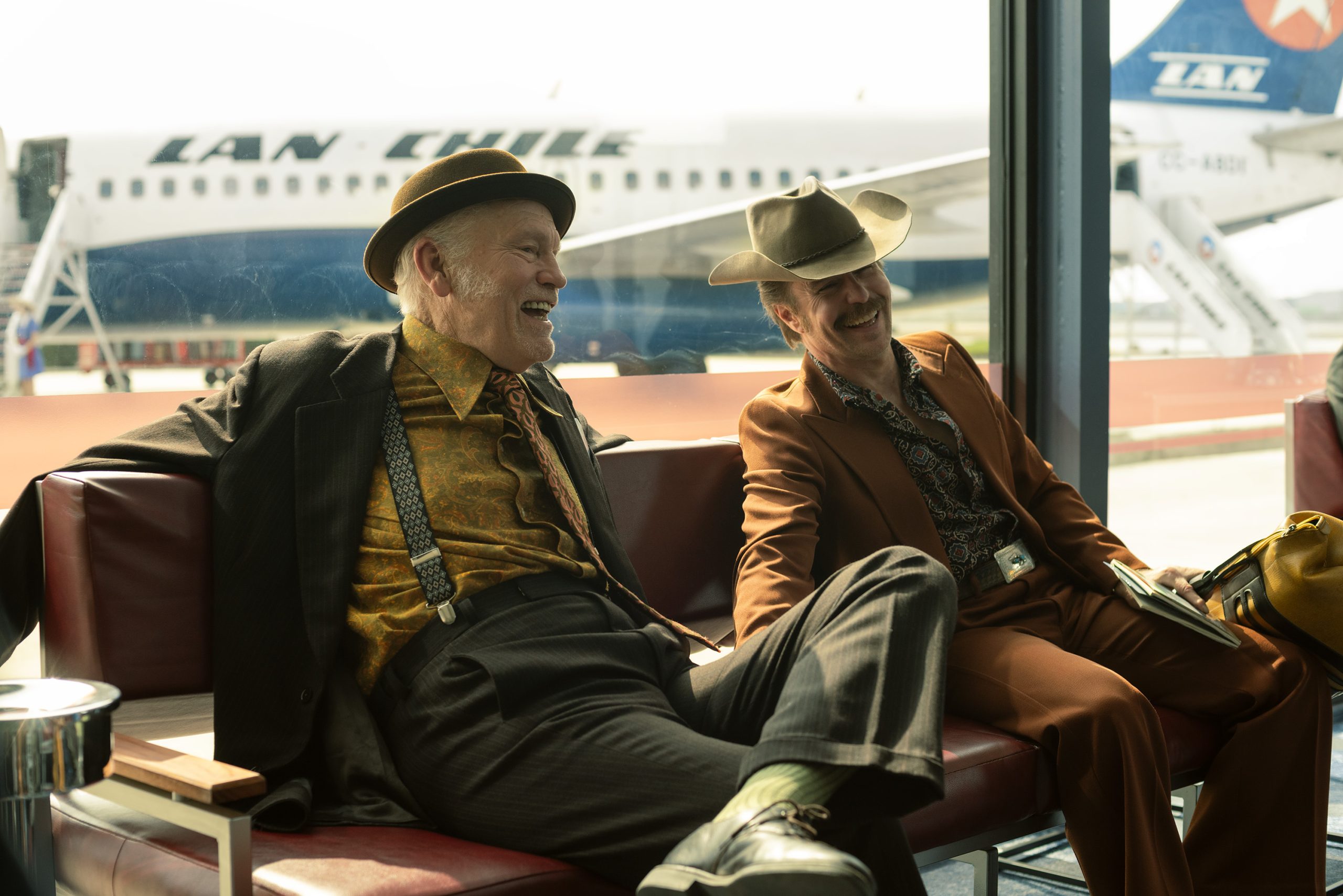
Writer-director Martin McDonagh burst onto the scene in the mid-00s with In Bruges and what felt like a fresh energy. It wasn’t entirely new—he didn’t invent mouthy, existential assassins, for example—but I was swept away nonetheless. The returns since have diminished, and now we arrive at Wild Horse Nine, McDonagh’s latest star-studded film, which somehow puts him right back where we started together 20 years ago. Is this film entertaining? Sure. Is it fresh or new? Hardly.
Stop me if you’ve heard this before: two CIA fixers/assassins, Chris and Lee (John Malkovich and Sam Rockwell), travel to an out-of-the-way vacation spot, Easter Island, while their boss (Steve Buscemi) makes ominous and threatening phone calls. In broad strokes, Wild Horse Nine is an In Bruges redux, save for a change in geographical context and a flip in who may or may not have to kill whom. The plot here also involves the real-world overthrow of Salvador Allende’s socialist Chilean government, and, if you can believe this, the truth about the JFK assassination. Worry not, McDonagh’s existential and theological concerns still hang about the film—who knew rental cars came with dashboard crucifixes—albeit now they combine with political bits in perfunctory ways. As an excuse to let Malkovich and Rockwell rip and run, the film has its moments of comedy and pathos (I’ll grant it two stars for the two stars); as a narrative with any real emotional weight, it’s a joke with a punchline at the film’s expense.
Taking a step back, America is infamous for destroying other countries and, years later, producing media about how sad and regretful they are about it. In general, I’m not the first to note this, but Wild Horse Nine is perhaps one of the more egregious recent examples. Setting aside the JFK MacGuffin, the film’s thrust is to lament what America did in Chile, and elsewhere. Which is to say again: please tell us something we don’t know.

