It’s been noted that Canadian filmmaker Antoine Bourges has a style which recalls that of French master Robert Bresson. Though lofty, it’s not an unwarranted comparison. In his new feature, Concrete Valley, Bourges takes a similar detached approach, one that forces the audience to slow down and pay careful attention. There are emotions at play here, but they’re subtle, buried within a mix of characters who feel like real people just trying to exist in their day-to-day lives.
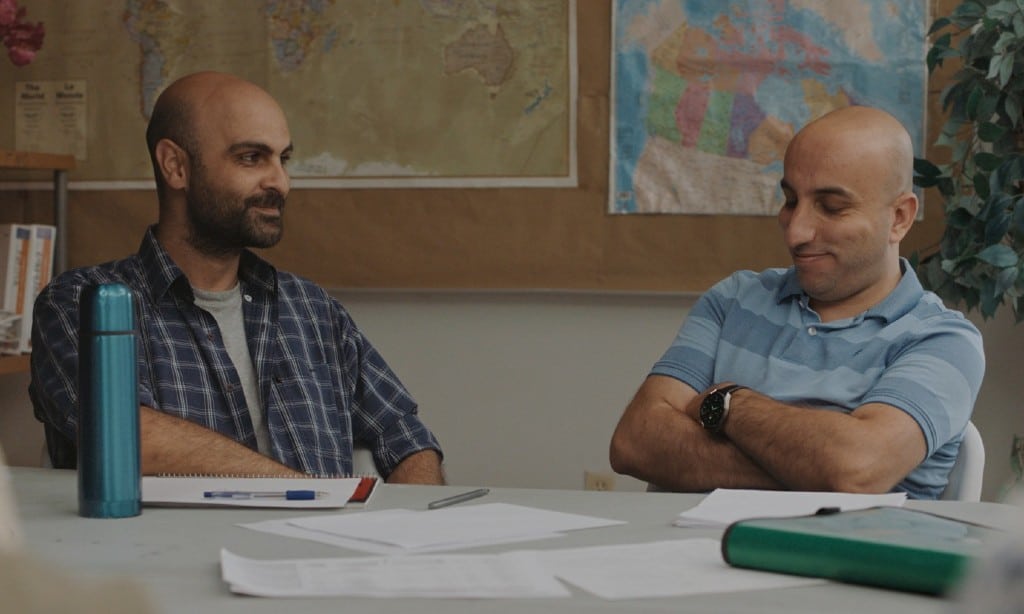
As co-written with Teyama Alkamli, Concrete Valley centres on a Syrian refugee family in Toronto led by father Rashid (Hussam Douhna, making his acting debut), a doctor now unqualified and at odds with himself in his adoptive home. He toils around the area helping where he can, while his wife Farah (Amani Ibrahim) works at a pharmacy and his son Ammar (Abdullah Nadaf) attends school. Bourges provides these unremarkable details via a series of small (and often stiff) tableaus, scenes that document the commonplace routines of each day—be it attending ESL classes, dealing with apartment maintenance woes, or trying to get a co-worker to take a shift. What his film builds to is not explosive, yet it can be revealing, with each moment seemingly structured on a cliff edge. Part of this feeling is because of the apparent problems in Rashid and Farah’s marriage; at the same time, it’s also possible to see, even through the coolness of Bourges’ approach, how these everyday strains take their toll. Sure, Rashid looks out for others, but what does that amount to for him? Who can he turn to for help?
These are worthwhile questions, however, the film’s opacity makes finding answers difficult. Concrete Valley values this society’s margins, the people who create community where they can. It’s also about an often difficult struggle for the transposed—be it one person, a family unit, or an entire neighbourhood. You may not grasp it all—or want to—but Bourges makes his implication clear: there is much here to understand.

